Damage to Housing and Civilian Infrastructure
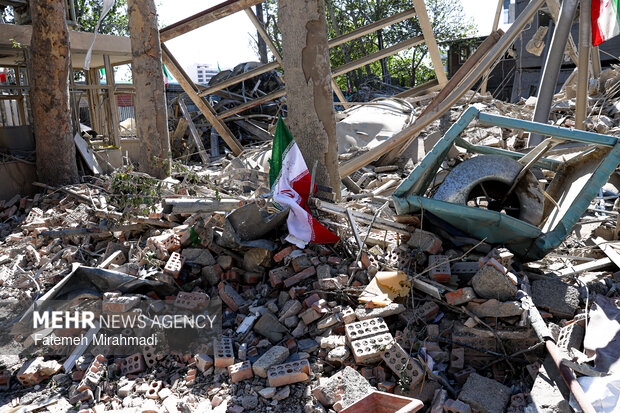
According to data from the Housing Foundation and provincial assessments, the damage inflicted on residential properties in many areas exceeds normal reconstruction capacities.
In East Azerbaijan Province, 7,739 structures were damaged, including 6,106 residential units and 1,633 commercial units. Compensation totaling 90 billion rials has been paid to 727 beneficiaries, and reconstruction work has begun on 96 units.
In Tehran, municipal estimates indicate that 39,585 housing units were damaged, along with the destruction of 6,122 vehicles and 372 motorcycles. In addition, 5,880 individuals from 1,829 households have been accommodated in 39 emergency shelters—one of the largest emergency housing operations in the capital’s history.
In Ilam Province, 12,400 residential units were damaged, including 155 that were completely destroyed. Rental assistance for up to one year has been allocated to 200 households left without housing. Local sources have also reported the destruction of 243 government buildings and damage to 1,200 vehicles.
In Hamadan Province, 1,950 residential and commercial units sustained damage, including 33 that were completely destroyed, while repairs are underway on 1,387 units. Damage to cultural heritage sites, including the Tomb of Baba Taher, has also been reported.
In Kurdistan Province, 9,829 structures were damaged, and 3,382 compensation claims have been filed. Some affected households are receiving rental assistance or reconstruction loans.
In Zanjan Province, more than 540 residential units were damaged, while losses to infrastructure and commercial properties have been estimated at approximately 500 billion tomans. Following attacks on nine workplaces covered under labor law, 34 workers were killed and 33 injured. An additional 77 workers have begun receiving unemployment benefits due to the complete closure of their workplaces.
Social Damage and Humanitarian Impact on Vulnerable Groups
According to the State Welfare Organization, more than 30,000 beneficiaries and families under welfare support have been affected by the recent attacks. These groups include persons with disabilities, female-headed households, older adults, and children—populations with heightened support needs during times of crisis. Among welfare beneficiaries, 17 individuals were killed and 17 injured.
Of the 1,700 homes belonging to affected beneficiaries, 82 were completely destroyed, while the remainder sustained damage ranging from 20 to 80 percent. Furthermore, 2,975 workshops and income-generating enterprises owned or operated by beneficiaries were damaged, with 635 experiencing destruction of more than half of their structures.
Damage to rehabilitation facilities has also been significant. Thirty-five rehabilitation centers sustained damage, with total financial losses estimated at more than 12 billion tomans.
In the area of psychosocial support, 225,000 counseling and psychological assistance services have been delivered nationwide by 8,000 social workers. National support hotlines 123 and 1480 received more than 68,000 calls, of which 15,000 required field intervention. In addition, 55,000 community-based psychosocial services have been provided to affected families, while 30,000 volunteer groups continue to deliver emergency assistance and resilience-training programs throughout the country.
Overall, during the conflict, 180 welfare facilities were relocated to safer areas and approximately 35,000 beneficiaries were displaced. Of these, 22,000 have since returned to their families. Around 3,000 children are currently undergoing family reunification processes, while another 10,000 children remain in the care of 700 family-like residential centers. An additional 25,000 children have been placed through foster care, guardianship, or adoption programs.
Final Analysis and the Necessity of Respecting the Principle of Distinction
Analysis of official and field-collected data indicates that the extensive attacks on residential areas, urban facilities, and social service centers raise serious concerns regarding compliance with the principle of distinction under international humanitarian law.
This principle, codified in Articles 48 and 51 of the Geneva Conventions and Additional Protocol I, obliges states and parties to an armed conflict to distinguish at all times between military objectives and civilians or civilian objects. It prohibits direct or indiscriminate attacks against civilians and civilian infrastructure.
Available evidence—including repeated strikes on residential buildings, hospitals, rehabilitation centers, and humanitarian institutions, as well as the high number of casualties among women and children—suggests that the principle of distinction may have been widely violated during the course of the conflict. The resulting harm has affected not only public health and security but also fundamental rights to health care, safe shelter, and social protection, pushing thousands of families into severe humanitarian distress.
Accordingly, this report emphasizes that adherence to the core principles of international human rights and humanitarian law—including distinction, proportionality, and the prohibition of indiscriminate attacks—must remain central to all assessments, accountability efforts, and compensation mechanisms. Continued violations of these principles pose serious risks to civilian protection systems, social trust, and the legitimacy of humanitarian and legal institutions.
The report therefore underscores the urgent need for rapid reconstruction programs, expanded psychosocial support services, compensation for affected families, and the establishment of independent monitoring mechanisms to document potential violations. Such measures are essential to safeguarding the rights to life, health, housing, and human dignity.