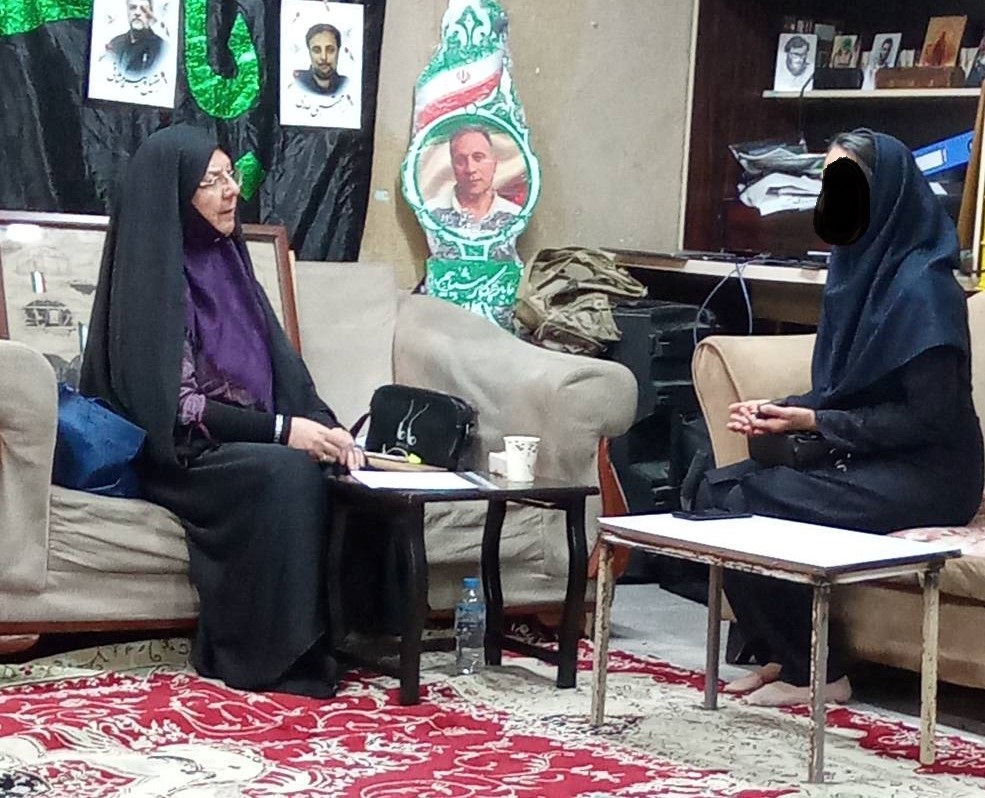
Zahra is a 42-year-old mother of three children—one son and two daughters, all under the age of ten. When her husband was killed during the missile attacks, their youngest child was only twelve days old. During the same attack, Zahra herself was injured by shrapnel, leaving her to cope not only with the devastating loss of her husband but also with the physical consequences of the conflict.
The family had been living in rented accommodation in one of the city’s underserved neighborhoods. Their home was severely damaged during the missile strikes and became uninhabitable. Alongside the physical destruction, the emotional trauma of losing her husband and the children’s father made it impossible for Zahra to continue living in the same community.
She was forced to relocate with her three young children to another town, where she could stay close to her parents and receive essential emotional and social support. Despite this move, uncertainty continues to define the family’s future. Rising living costs, the absence of a stable income, and the full responsibility of caring for three young children have placed an overwhelming burden on her.
Her husband had been the family’s sole breadwinner. Following his death, the household lost its primary source of income. While still recovering from the physical and psychological effects of the conflict, Zahra must now shoulder the responsibility of providing housing, food, education, healthcare, and daily care for her children on her own.
Zahra’s story illustrates the multiple and lasting impacts of armed conflict on civilian families. In a single moment, families can lose not only a loved one, but also their home, their sense of security, and the financial stability on which their future depended.
This family is among the conflict-affected households identified through HAMI’s field assessments and needs-based vulnerability screening. Following individual case assessment, they were enrolled in HAMI’s humanitarian assistance programme, through which part of their urgent medical, livelihood, and humanitarian needs has been addressed with the support of humanitarian partners and donors.