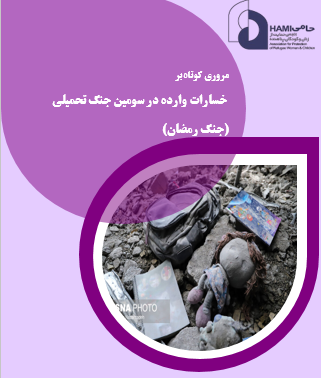
The large-scale military aggression experienced during the course of the “Ramadan War” and the military aggression carried out by the Israeli regime and the United States against the Islamic Republic of Iran in recent weeks constitute one of the most complex and extensive periods of damage to civilian infrastructure, the healthcare system, social services, critical infrastructure, and cultural heritage in recent decades. The geographic scope and thematic diversity of these damages have extended from urban and rural settlements to hospitals, rehabilitation centers, schools, universities, energy networks, transportation systems, the environment, technology and innovation centers, and even cultural, sports, and historical sites. A significant portion of the country’s population, particularly vulnerable groups, has been directly affected.
Based on official data from national and provincial authorities and supported by field assessments, this report seeks to provide an accurate, documented, and analytical picture of the human, social, infrastructural, and cultural dimensions of this period. It not only clarifies the scale of destruction and casualties but also demonstrates how disruptions in each sector have produced cascading effects across other vital areas of the country. Among civilians, the extensive loss of women and children, the displacement of thousands of families, widespread damage to housing and social service facilities, and the sharp increase in support needs reflect the unprecedented human pressure imposed on society during this period. Within the healthcare system, the deterioration of medical facilities, the destruction of critical centers in various provinces, the extraordinary strain on healthcare personnel, and the reduced capacity for service delivery illustrate additional dimensions of this crisis.
At the same time, attacks on industrial, energy, transportation, technology, and environmental infrastructure—from refineries and railway lines to innovation centers and protected natural areas—have created multilayered disruptions in the country’s vital systems. The consequences of these disruptions extend beyond the wartime period and affect both productive and environmental structures. The fields of culture, education, and historical heritage have also suffered unprecedented damage, ranging from the destruction of hundreds of schools and damage to major universities to losses affecting UNESCO-listed sites, museums, and libraries. In the field of sports, the destruction of more than two hundred civilian sports facilities demonstrates that this sector, as one of the pillars of social well-being and cultural capital, has not been spared from harm.
Analysis of the collected data indicates that the pattern of attacks has directly and indirectly affected the daily lives of millions of people and placed considerable pressure on the country’s support systems. This report has been prepared with the aim of accurately documenting the current situation, recording damages, assisting reconstruction planning, and providing a basis for national and international assessments. Accordingly, the need for immediate attention to infrastructure reconstruction, compensation for human losses, strengthening welfare systems, and establishing mechanisms for continuous monitoring and evaluation is more urgent than ever.
In line with its efforts to document these damages, HAMI has undertaken the collection and documentation of reports across various sectors and has submitted them to relevant domestic and international institutions. To obtain the full report, please contact the Association’s office.final . english